Country guide
🇭🇷Croatia
An Adriatic country of islands, historic towns, turquoise sea, mountains, olives, wine and summer evenings scented with pine trees and grilled food.
- Regions
- 8
- Articles
- 1
- Thematic categories
- 1
Trip ideas

General information
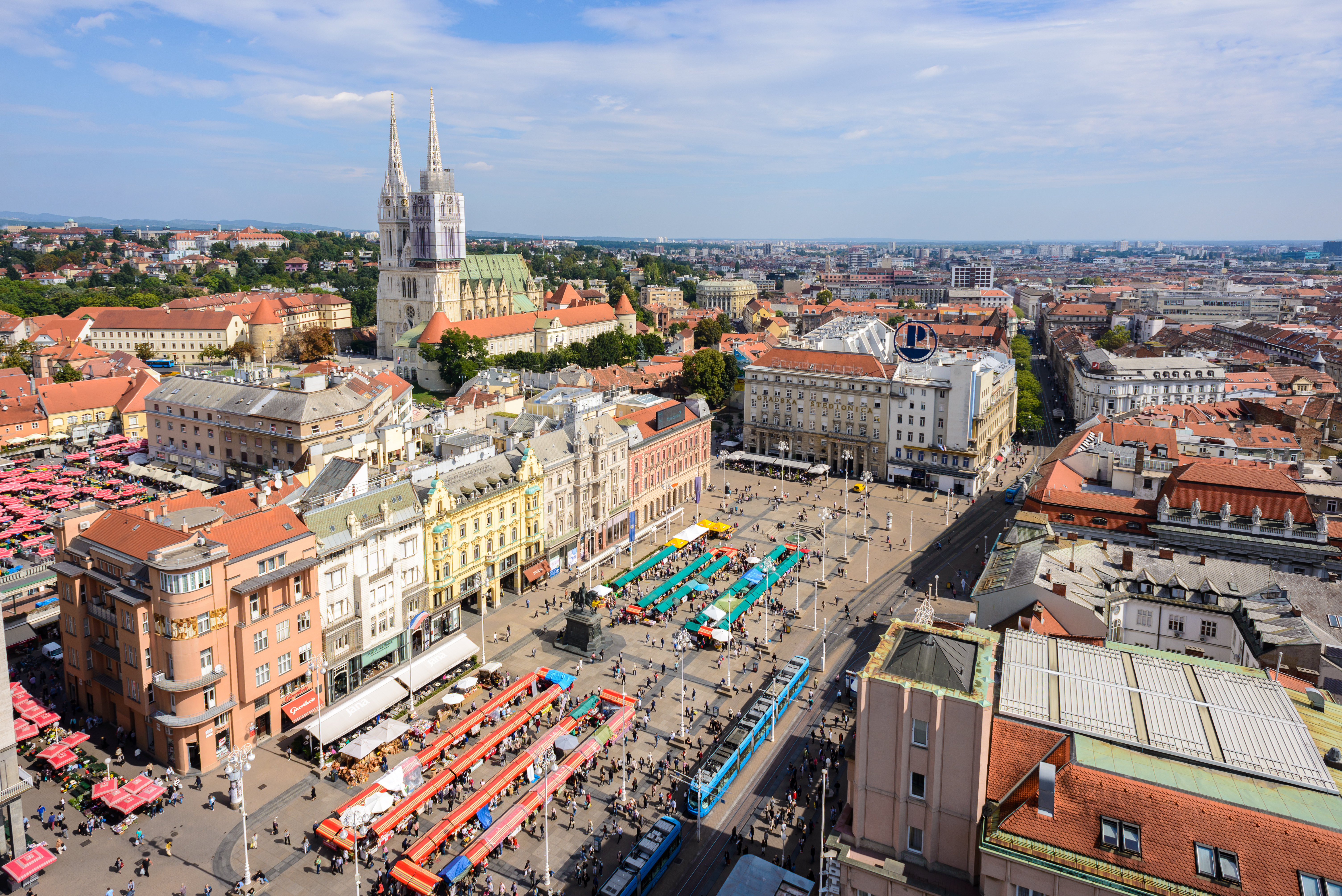
Croatia is a Mediterranean and Balkan country known for the Adriatic Sea, islands, historic towns, clear water, national parks, olives, wine, Dalmatia, Istria and Dubrovnik. It lies between Slovenia, Hungary, Serbia, Bosnia and Herzegovina, Montenegro and the Adriatic Sea. The capital Zagreb is an inland city with cafes, parks, museums and a Central European atmosphere, but the coast is the country’s biggest travel draw. Key places include Dubrovnik, Split, Zadar, Šibenik, Rovinj, Pula, Hvar, Brač, Korčula, Krk, Plitvice Lakes, Krka, Istria and Dalmatia. Croatia suits travelers who want sea, islands, historic towns, sailing, road trips, summer atmosphere and a mix of Mediterranean ease with Balkan warmth.
Travel
Dubrovnik is Croatia’s most famous icon, with city walls, a stone old town and views over the Adriatic. Split combines Diocletian’s Palace, a harbor, nightlife and a great location for island trips. Zadar and Šibenik are pleasant alternatives with history, sea and access to national parks. Istria attracts visitors with Rovinj, Pula and Poreč, wine, olive oil and a slightly Italian feel. Islands such as Hvar, Brač, Korčula, Vis, Mljet and Krk each have their own rhythm. Inland, it is worth visiting Plitvice Lakes, Krka, Zagreb, Slavonia and the mountain areas of Velebit. Croatia is ideal for beach holidays, island hopping, coastal road trips, sailing, history, national parks and slower journeys outside the peak season.
Life and work
Life in Croatia varies greatly between the coast, islands, Zagreb and inland regions. Zagreb has the strongest job market, especially in administration, technology, services, education, media and international companies. Split, Rijeka, Zadar, Pula and Dubrovnik are more connected to tourism, ports, services and the seasonal economy. Costs on the coast and in popular tourist areas rise significantly in season, while inland areas can be more affordable. English is common in tourist regions, but Croatian helps with long-term living and integration. Croatia suits people who want the sea, a Mediterranean rhythm, safety, nature and who do not mind seasonality, summer crowds or occasionally slower administration.
Culture and food
Croatian culture combines Mediterranean, Central European, Balkan and Venetian influences. The coast feels different from Zagreb, Istria different from Dalmatia, and Slavonia very different from the islands. The cuisine is regional and varied: on the coast, typical flavors include fish, seafood, olive oil, blitva, grilled meat, pašticada, black risotto and local wines, while inland areas offer čobanac, kulen, štrukli, hearty meats and freshwater fish. Istria is strong in truffles, wine and olive oil, while Dalmatia favors simple Mediterranean cooking. Croatia is a country where summer is often measured by the shade under a pine tree, the number of steps down to the beach and whether someone has already lit the grill.
Practical notes
In Croatia, it is worth paying attention to seasonal rules, driving and behavior on the coast. Alcohol is widely available, and wine and rakija are part of social life, but public drunkenness, noise in historic centers or inappropriate behavior in ports and resorts can quickly lead to fines. Smoking and vaping are restricted in indoor public spaces, public transport and some public areas; in restaurants and bars, rules may differ depending on the type of space. Croatia is relatively open to naturism, especially on designated FKK beaches and campsites, but outside these places it is better to be careful; topless sunbathing is often tolerated on tourist beaches, but may feel inappropriate in more conservative or family-oriented settings. Cannabis, THC products and other illegal drugs can cause serious legal trouble, especially when buying, carrying larger amounts or crossing borders. For kratom, CBD and similar products, always check current rules and product composition. When driving, expect general limits of 50 km/h in towns, 90 km/h outside built-up areas, 110 km/h on expressways and 130 km/h on motorways, unless signs say otherwise. The drink-driving limit is 0.5 g/l for standard drivers, but 0.0 g/l for novice and professional drivers. Croatian motorways are usually tolled by distance, so with a rental car expect payment at toll booths or an electronic system depending on the vehicle setup.
Regions and routes
Regions and areas
Lika, Velebit and Plitvice Lakes
Lika, Velebit, Plitvice Lakes, forests, waterfalls, mountains, karst landscapes, bears, hiking and Croatia’s wild inland corridor.
- Articles
- 1
Central Dalmatia: Split, Trogir, Hvar and Brač
Split, Trogir, Hvar, Brač, islands, Roman palaces, beaches, ferries, nightlife, stone villages and Croatia’s classic Dalmatian core.
- Articles
- 0
Istria
Istria, Rovinj, Pula, Motovun, hill towns, beaches, Roman ruins, truffles, wine and Croatia’s Italian-flavoured peninsula.
- Articles
- 0
Kvarner, Rijeka and the Northern Islands
Kvarner, Rijeka, Krk, Cres, Lošinj, Opatija, islands, old resorts, ports, beaches and Croatia’s gateway between Istria and Dalmatia.
- Articles
- 0
Northern Dalmatia: Zadar, Šibenik, Kornati and Krka
Zadar, Šibenik, Kornati, Krka, islands, waterfalls, stone towns, marinas, beaches and one of Croatia’s most balanced coastal regions.
- Articles
- 0
Slavonia, Baranja and the Croatian Danube
Slavonia, Baranja, Osijek, Vukovar, the Danube, vineyards, wetlands, villages, paprika, wine and Croatia’s quiet eastern lowlands.
- Articles
- 0
Southern Dalmatia: Dubrovnik, Korčula, Mljet and Pelješac
Dubrovnik, Korčula, Mljet, Pelješac, city walls, islands, vineyards, beaches, monasteries and Croatia’s most dramatic southern coast.
- Articles
- 0
Zagreb and Inland Croatia
Zagreb, inland Croatia, cafés, museums, castles, hills, vineyards, thermal spas, baroque towns and Croatia beyond the coast.
- Articles
- 0